Blog

  • Consistency Is the Foundation of Modern Leadership

    Consistency Is the Foundation of Modern Leadership

    Consistency doesn’t look exciting.

    It doesn’t trend on social media.
    It doesn’t feel intense or dramatic.
    It rarely gets applause.

    But in modern leadership, consistency is one of the most powerful forces you can build.

    Why consistency looks boring — but isn’t

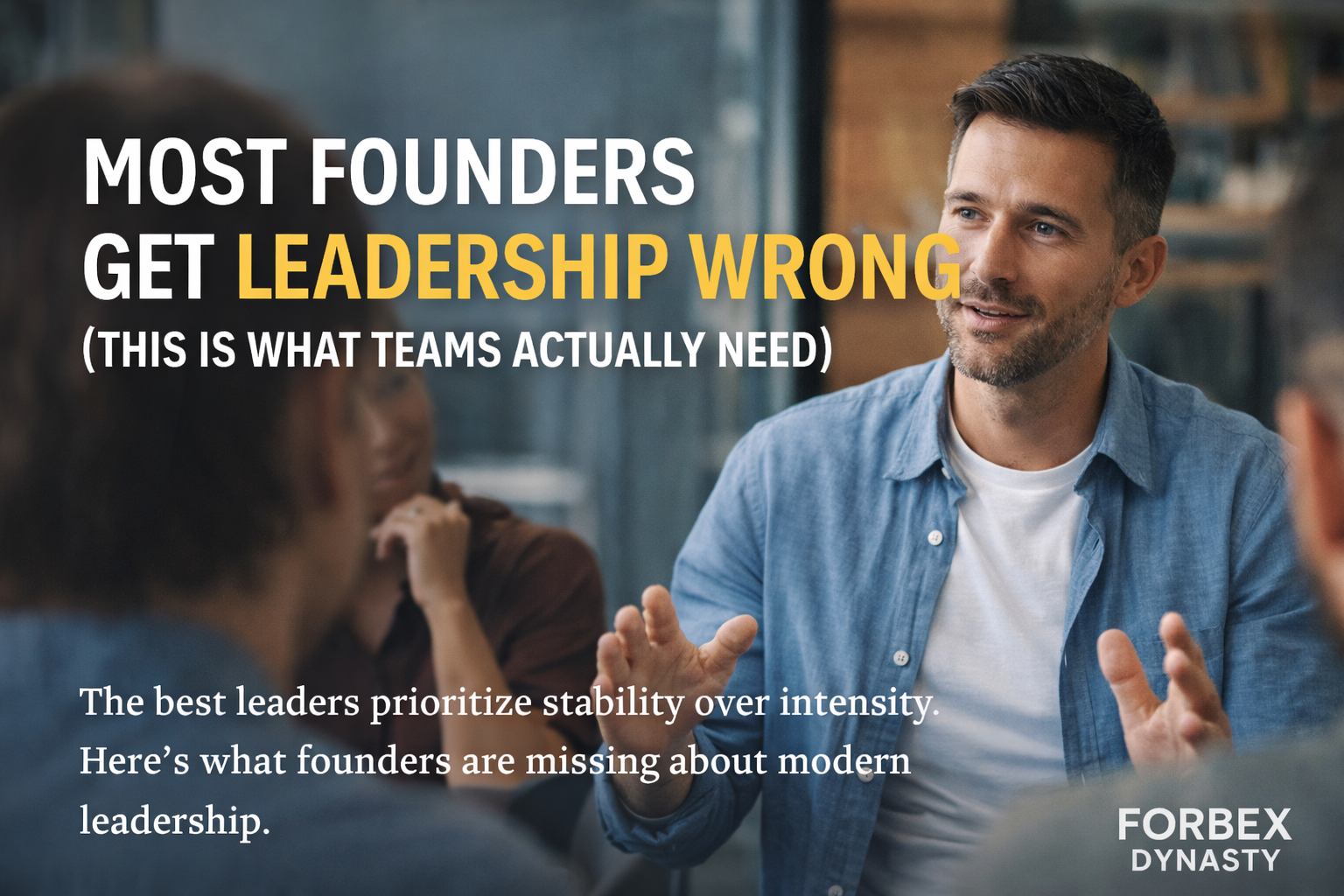
    We often confuse leadership with intensity.

    We imagine leaders as energetic, reactive, always pushing, always changing direction.
    But teams don’t thrive on intensity.

    They thrive on stability.

    Consistency may not create emotional spikes —
    but it creates psychological safety.

    And psychological safety builds performance.

    Teams don’t need excitement. They need reliability.

    A team doesn’t wake up asking:

    “What surprise will our leader bring today?”

    They want to know:

    • What are the expectations?
    • How are decisions made?
    • What happens if something goes wrong?
    • Will the reaction be predictable?

    When a leader reacts differently every day —
    calm on Monday, explosive on Tuesday, silent on Wednesday —
    uncertainty spreads.

    And uncertainty creates anxiety.

  • The Leadership Skill Most Founders Ignore (But Teams Need Most)

    The Leadership Skill Most Founders Ignore (But Teams Need Most)

    Most leaders try to be impressive.

    But great leaders try to be predictable.

    Consistency may look boring.
    But it is powerful.

    Teams don’t need daily excitement.
    They need reliability.

    When a leader reacts differently every day, uncertainty spreads.

    People stop focusing on work.
    They start focusing on mood.

    But when behavior is stable, clarity spreads.

    Expectations become clear.
    Decisions become faster.
    Trust becomes stronger.

    Consistency reduces anxiety.
    And reduced anxiety improves performance.

    Modern leadership is not about intensity.

    It is about stability.

    Strong leaders don’t create emotional waves.

    They create calm.

    And calm builds trust.

    Is your team reacting to your mood — or responding to your clarity?

  • Log Badi Baaton Par Nahi, Daily Action Par Trust Karte Hain

    Aaj ke time me har koi bol sakta hai:
    “Main serious hoon.”
    “Main long-term ke liye kaam kar raha hoon.”
    “Main value dena chahta hoon.”

    Par sach yeh hai —
    log baaton par nahi, action par trust karte hain.

    Aur woh action bhi koi bada event nahi hota.
    Woh hota hai roz ka chhota kaam.


    Badi Baaton Ka Problem Kya Hai?

    Badi baatein sunne me achhi lagti hain,
    par unka ek problem hota hai:

    • Aaj boli, kal bhool gaye
    • Aaj promise, kal excuse

    Isliye log dheere-dheere
    baaton par bharosa karna chhod dete hain.


    Daily Action Trust Kaise Banata Hai?

    Daily action ka matlab hai:

    • Roz thoda kaam
    • Roz same direction
    • Roz same level ka effort

    Jab log dekhte hain ki:

    “Yeh banda roz aa raha hai,
    bina noise ke kaam kar raha hai”

    toh trust automatically build hota hai.


    Consistency Skill Se Zyada Powerful Hai

    Sach yeh hai:

    • Average skill + high consistency = strong trust
    • High skill + no consistency = zero trust

    Log us par bharosa karte hain
    jo predictable hota hai.

    Unhe pata hota hai:

    • Yeh kal bhi dikhega
    • Yeh apna kaam karega

    Business Aur Personal Brand Me Yeh Kyun Important Hai?

    Business ho ya personal brand —
    dono trust par chalte hain.

    Agar tum:

    • Kabhi active, kabhi gayab
    • Kabhi clear, kabhi confused

    toh log tumhe follow nahi karenge.

    Par agar tum:

    • Roz same message
    • Roz same effort
    • Roz same intent

    dikhate ho —
    toh log rukte hain, padhte hain, sunte hain.


    Final Thought

    Log impress nahi hote,
    log sure hona chahte hain.

    Sure ki tum:

    • Kal bhi kaam karoge
    • Next week bhi dikhe rahoge

    Isliye yaad rakho —
    log badi baaton par nahi, daily action par trust karte hain.

  • What I Changed in My Thinking About Leadership

    What I Changed in My Thinking About Leadership

    For a long time, I believed leadership meant being busy.

    More meetings.
    More decisions.
    More control.

    I thought the more involved I stayed, the better the results would be.
    If something went wrong, my instinct was to step in and fix it myself.

    That version of leadership looked productive on the surface.
    But over time, it created stress, burnout, and dependency.

    Something wasn’t working.

    The shift that changed everything

    What finally changed my thinking was a simple realization:

    Leadership is not about managing people.
    It’s about designing systems.

    When systems are unclear, leaders end up micromanaging.
    They chase updates, review every small decision, and stay stuck in day-to-day execution.

    Not because they want control —
    but because clarity is missing.

    People don’t fail first. Systems do.

    Earlier, whenever performance dropped, my first question was:
    “Why didn’t this person deliver?”

    Now, I ask a very different question:
    “What was unclear in the system?”

    Was ownership defined?
    Were expectations documented?
    Were decision boundaries clear?

    Most of the time, the issue wasn’t capability.
    It was confusion.

    What clear systems actually do

    Clear systems create:

    • Clear ownership
    • Faster decisions
    • Less friction
    • More trust

    When people know what to do and how decisions are made,
    they don’t need constant supervision.

    They move on their own.

    And when that happens, leaders finally get space to think, not just react.

    Leadership today looks different

    I no longer measure leadership by how busy someone looks.
    I measure it by how well their systems work without them.

    Less chasing.
    Less burnout.
    More ownership.
    Better results.

    That’s what real leadership looks like to me now.

    Great leaders don’t control people.
    They create clarity.

    And clarity is what truly scales.

  • Leadership Is a Skill You Build, Not a Title You Get

    Leadership Is a Skill You Build, Not a Title You Get

    There is a common mistake people make about leadership.

    They believe leadership begins after promotion.
    After authority.
    After a title appears next to their name.

    But leadership doesn’t wait for permission.

    It starts much earlier — in how you think, act, and take responsibility when no one expects you to.


    Why Titles Fail to Create Leaders

    Titles can change reporting structures.
    They cannot change behavior.

    You’ve probably seen this:

    • managers people obey, but don’t trust
    • leaders who rely on authority instead of influence
    • teams that function, but don’t believe

    That gap exists because leadership is not a role.
    It’s a set of skills.

    And skills are built through practice, not appointment.

    Leadership Is About Reducing Uncertainty

    At its core, leadership is simple.

    When things are unclear, people look for direction.

    Leadership shows up when:

    • priorities clash
    • information is incomplete
    • pressure is high
    • mistakes happen

    Leaders don’t always have answers.
    But they bring calm, clarity, and structure to chaos.

    That ability has nothing to do with your designation.


    You’re Already Practicing Leadership Every Day

    Whether you realize it or not, you send signals daily:

    • Do you take ownership or avoid responsibility?
    • Do you bring clarity or add confusion?
    • Do you respond thoughtfully or react emotionally?

    These small behaviors compound.

    Over time, people decide whether they can rely on you.
    That decision is the foundation of leadership.


    Why the Title Usually Comes Later

    Organizations rarely promote someone and hope leadership appears.

    They promote people who already:

    • think beyond their task list
    • act responsibly under pressure
    • improve systems, not just outcomes
    • earn trust without demanding it

    By the time the title arrives,
    the leadership is already visible.

    The role doesn’t create the leader.
    It simply confirms one.


    A Better Question to Ask Yourself

    Instead of asking:
    “When will I become a leader?”

    Ask:
    “What responsibility am I avoiding right now?”

    Leadership grows exactly there —
    where responsibility feels uncomfortable.


    Final Thought

    Leadership isn’t loud.
    It isn’t dramatic.
    And it doesn’t announce itself.

    It’s built quietly, through repeated choices,
    long before anyone gives you a title.

    And when the title finally arrives,
    it won’t change who you are.

    It will only reveal it.
  • Leadership Is a Skill You Build, Not a Title You Get

    Leadership Is a Skill You Build, Not a Title You Get

    Most people believe leadership starts with a title.

    Manager. Founder. Team Lead. CEO.

    But real leadership begins much earlier — often before anyone notices, and long before anyone gives permission.

    Leadership isn’t something an organization hands you.
    It’s something you build through behavior, decisions, and consistency.


    The Title Myth

    Titles create hierarchy.
    They don’t create trust.

    A title can make people report to you.
    It cannot make them respect you.

    Respect is earned when people feel:

    • understood
    • supported
    • challenged in the right way
    • safe to speak honestly

    None of this comes from a designation.
    It comes from how you show up every day.

  • Why Motivation Stops Working After a Point

    Motivation works — but only for a while.

    At the beginning, motivation creates movement.
    But over time, it fades.
    And when it fades, most leaders panic.

    The problem is not people.
    The problem is dependency on motivation.

    Strong leaders don’t depend on daily excitement.
    They depend on systems that work even on low-energy days.

    If performance drops when motivation drops,
    your leadership needs structure, not speeches.

  • The Simple Leadership System That Actually Works

    The Simple Leadership System That Actually Works

    Most leadership advice sounds inspiring — but fails in real life.

    Motivation fades.
    Speeches are forgotten.
    Follow-ups become exhausting.

    In 2025, effective leadership is no longer about pushing people harder.
    It’s about building a system that works even when you’re not present.

    The leaders who win today don’t rely on energy or authority.
    They rely on clarity, process, and review.

    This is the simple leadership system that actually works.


    Forget Motivation. Forget Speeches.

    Motivation is temporary.
    Speeches feel good — but only for a moment.

    If leadership depended on motivation, teams would collapse every Monday morning.

    Real leadership is not emotional.
    It’s structural.


    The 3 Pillars of an Effective Leadership System

    Great leadership always comes down to three repeatable elements.

    1. Clarity — Everyone Knows What Matters

    Clarity means:

    • Priorities are visible
    • Goals are specific
    • Expectations are written, not assumed

    When clarity exists, people don’t guess.
    They act with confidence.

    Confusion is the biggest productivity killer — not laziness.


    2. Process — Work Happens Without Reminders

    A strong process means:

    • Tasks are documented
    • Ownership is clear
    • Work flows automatically

    If you need to remind people every day,
    you don’t have a people problem — you have a system problem.

    Good processes remove dependency on the leader.


    3. Review — Learning Weekly, Not Yearly

    Most teams review only when something fails.

    Strong teams review every week.

    Weekly review creates:

    • Fast learning
    • Small corrections
    • Continuous improvement

    You don’t wait for annual failures.
    You improve while moving forward.


    When These Three Exist, Performance Becomes Predictable

    With clarity, process, and review:

    • Output becomes consistent
    • Accountability becomes natural
    • Results stop depending on mood

    This is how high-performing teams are built.

    Not through pressure.
    Through design.


    Leadership Isn’t About Pushing People

    True leadership removes friction.

    It removes:

    • Confusion
    • Unclear ownership
    • Broken workflows

    When systems are strong, people perform without force.

    Leadership isn’t about pushing people.
    It’s about removing confusion.


    Final Thought

    If you want better results,
    don’t ask people to work harder.

    Ask yourself:
    👉 Is my system strong enough to support them?

    That question changes everything.

  • Why Most Leaders Fail Without Knowing It

    Most leaders don’t fail loudly.
    They fail silently.

    They stay busy.
    They attend meetings.
    They talk about vision.

    But they never build systems.

    When results depend on moods, energy, or pressure,
    failure is guaranteed — just delayed.

    Leadership is not about doing more.
    It’s about designing better.

    If your success can’t be repeated,
    it’s not leadership.
    It’s luck.

  • Leadership in 2025 Is About Systems, Not Motivation

    Most leaders still believe motivation is the key to performance.
    In 2025, that belief is breaking.

    Motivation is temporary.
    Systems are permanent.

    Great leaders don’t wake up every day trying to inspire people.
    They build systems that make the right action easy — even on bad days.

    When your team performs only when you motivate them,
    you don’t have a leadership problem,
    you have a system problem.

    Leadership today is not about energy.
    It’s about clarity, structure, and repeatable processes.

    Build systems first.
    Results will follow.

🎁 Free PDF Guide – 10 Startup Mistakes to Avoid in 2025

Don’t repeat the same mistakes most founders make 🚀
Enter your email below and get instant access to our exclusive PDF.

Yes, I also want weekly startup tips & growth hacks.

✅ 100% Privacy Guaranteed. No spam ever.

🎉 Thank you for subscribing! Check your inbox now for the PDF download link.